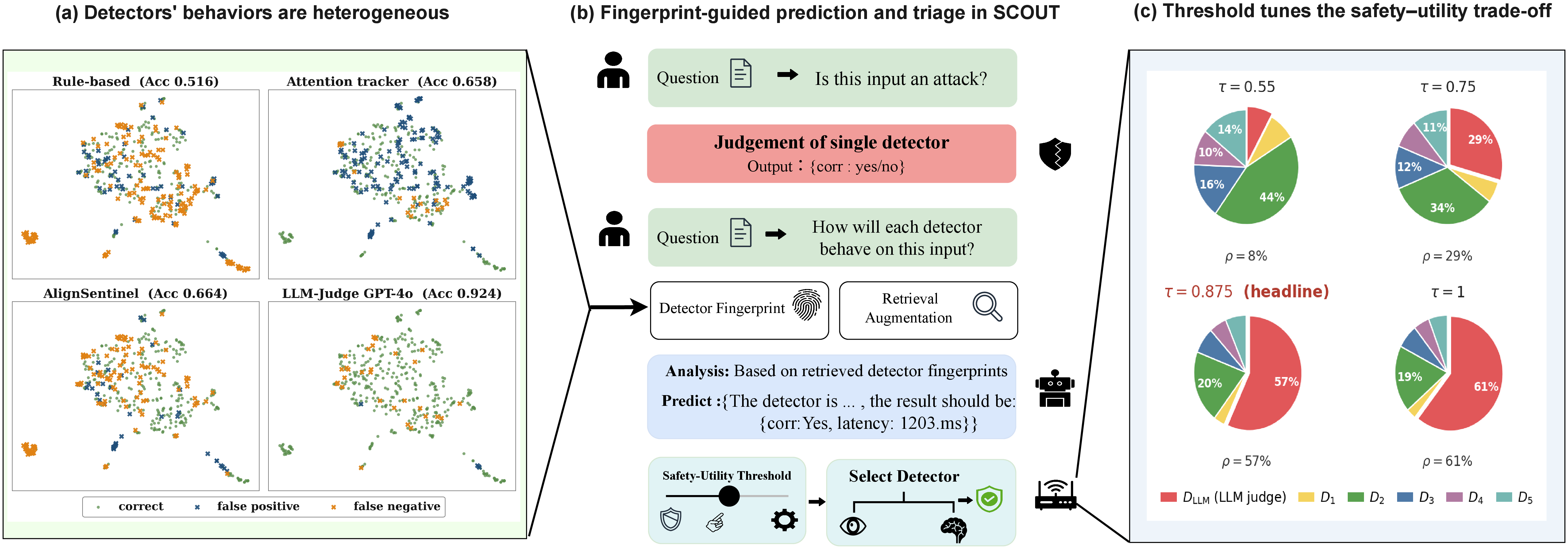
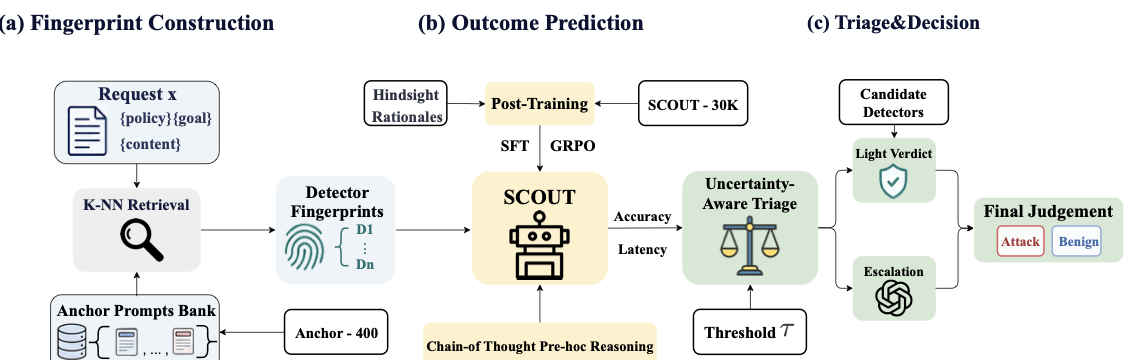
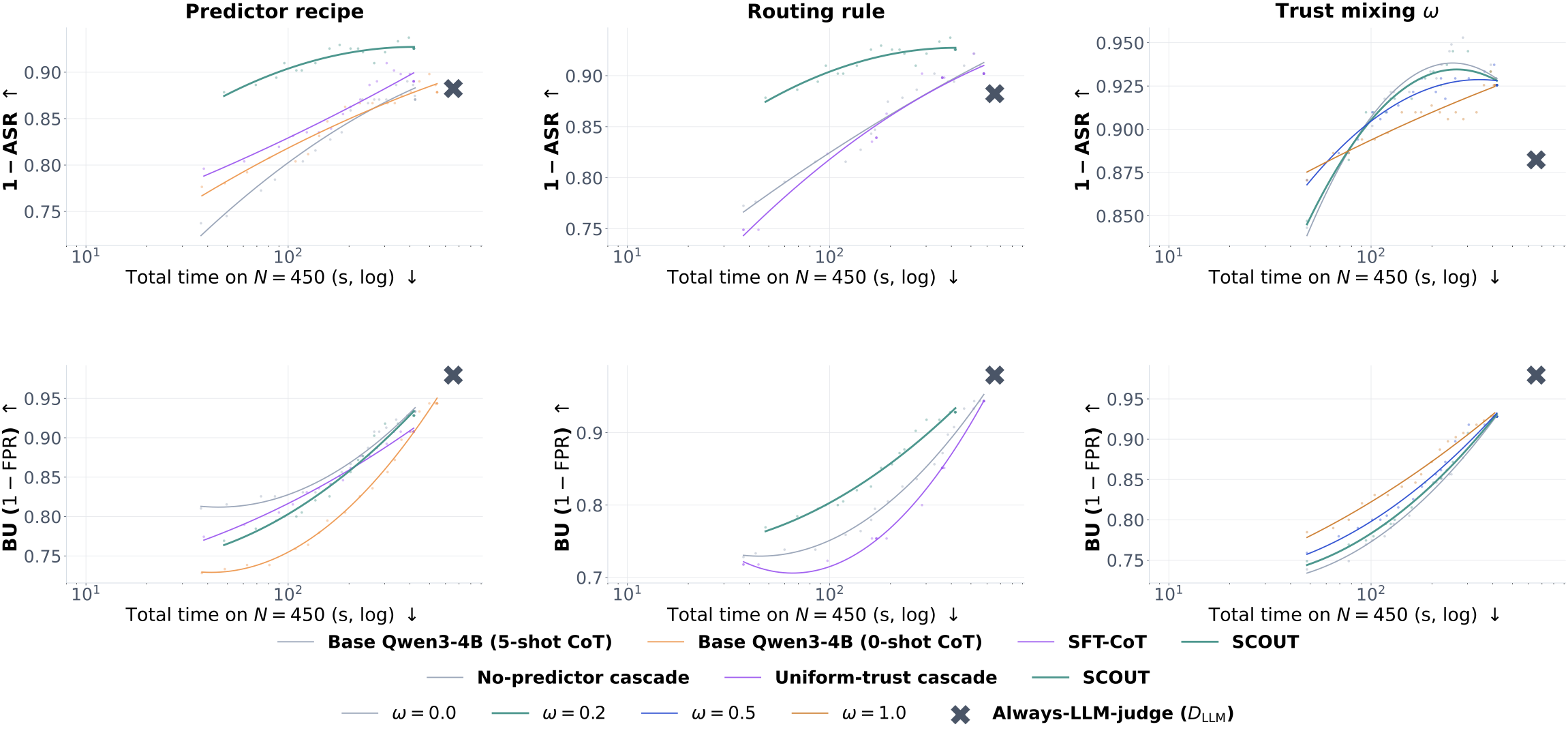
SCOUT treats defense as a routing problem. For each input, it estimates how each detector is likely to behave, runs the light detectors that look reliable, and calls the LLM judge only when the vote is still uncertain.
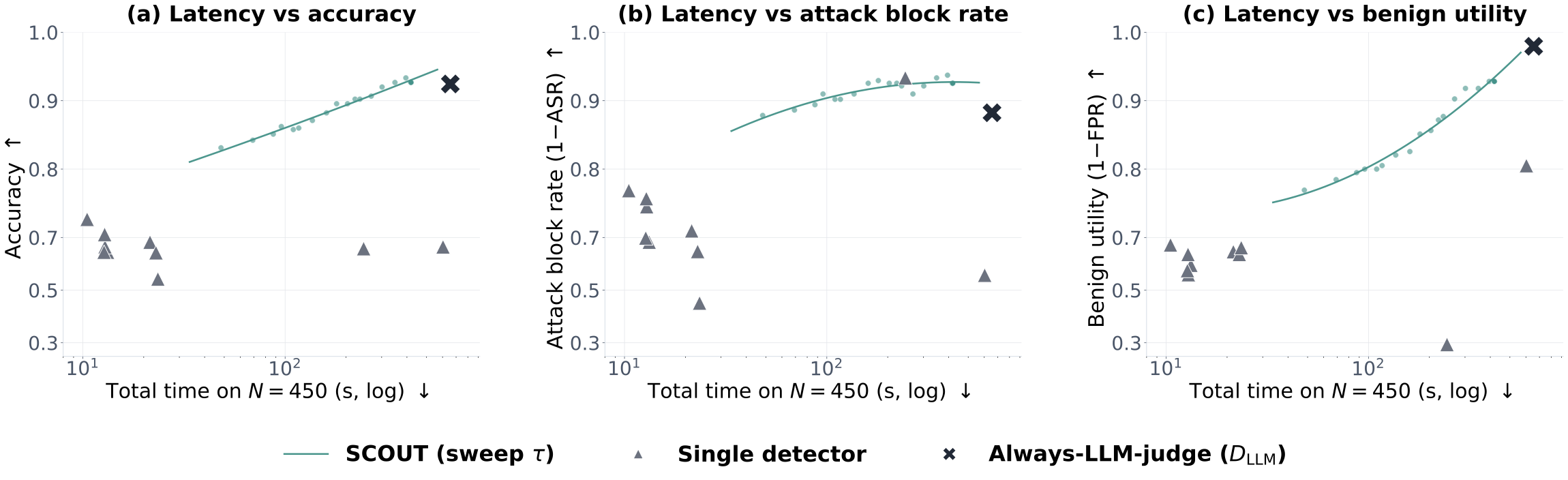
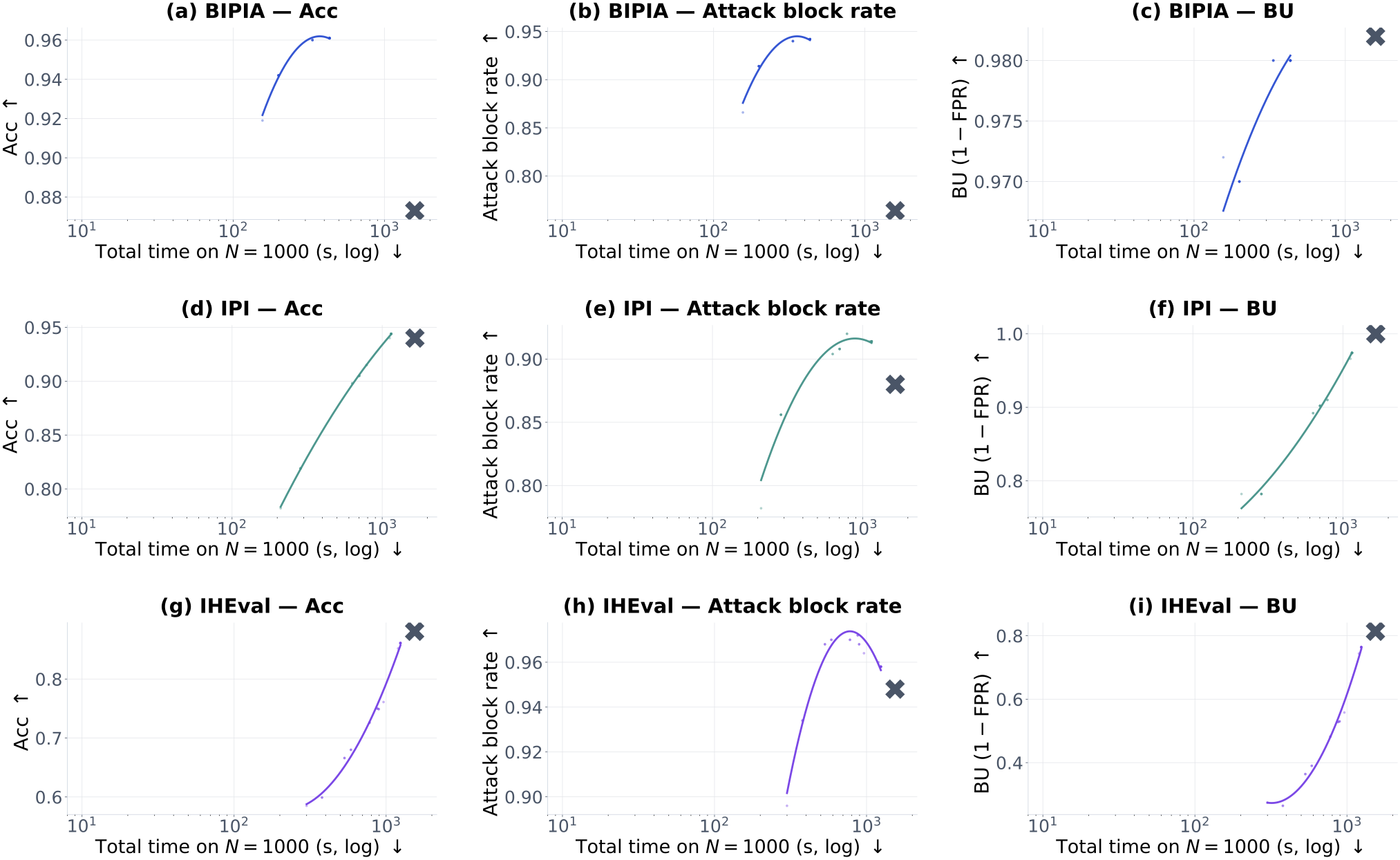
A single threshold, tau, controls the trade-off. Higher values call the judge more often; lower values lean on the light pool and reduce latency.
- Per-input detector allocation instead of a fixed single-detector pipeline.
- Detector correctness and latency estimates built from similar past inputs.
- One threshold for moving between stronger safety and lower wall-clock time.
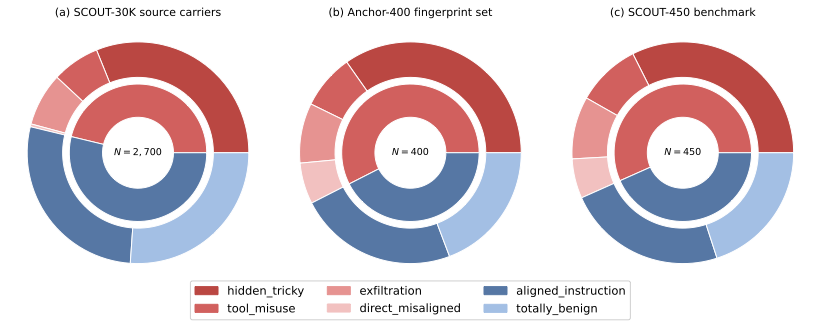
- Evaluation on SCOUT-450, with transfer tests on BIPIA, IPI, and IHEval.